The Art of Playing Less
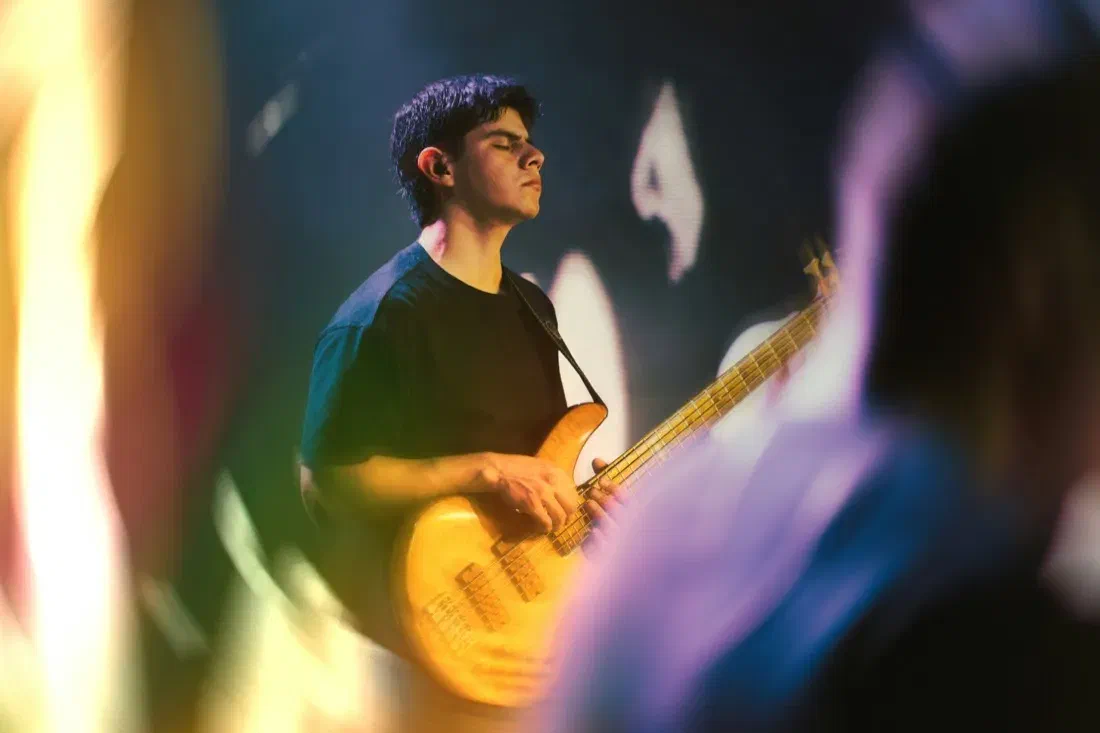
The best church musicians I know are not the ones who play the most notes. They are the ones who know exactly which notes to leave out.
That sounds like a small insight, but it changes everything about how you show up on a Sunday morning. The difference between an average player and a great one in a church context is rarely speed or technical range. It is the ability to hear the room, read the moment, and decide that this part of the song does not need you in it.
Playing less is harder than it sounds. It requires confidence, experience, and a clear sense of what your actual job is. Your job is not to demonstrate your ability. Your job is to help the congregation sing.
What Playing Less Actually Requires
It takes more skill to play a simple part well than it does to fill every measure. Simplicity exposes everything. If your time is off, if your tone is harsh, if your dynamics do not follow the room, there is nowhere to hide. You cannot mask it with activity.
That is why inexperienced players often overplay. They fill space because they are not sure what else to do, or because they are trying to prove they belong in the room. They play louder, busier, and more aggressively, not because the song needs it, but because it feels safer to be heard than to risk being unnoticed.
Experienced players do the opposite. They have nothing to prove, so they can afford to listen. They trust the song and the people around them. They play what serves the moment, and when the moment does not need them, they drop out and let the room breathe.
This is not passivity. It is a kind of musical confidence that only comes with time and intentionality.
Every Part Has a Window
In a well-arranged worship set, every instrument has a frequency window and a dynamic window. The kick drum and bass own the low end. The acoustic guitar and piano fill the mids. The electric and vocals sit above them. The cymbals and percussion live at the top.
The best church musicians understand that their job is to stay inside their window and stay out of everyone else’s. A guitar player who fills the same mid-range frequencies as the keys player creates mud. A drummer who crashes every fill distracts from the transition. A vocalist who sings every harmony at full volume fights the lead instead of supporting it.
Playing less means staying in your lane. It means trusting the bass player to hold the low end so your left hand can stop. It means trusting the worship leader to carry the melody so your vocal can blend. It means knowing when the song needs a pad and when it needs silence.
This is the same principle we explored in How Loud Is Too Loud, but applied at the individual instrument level. Clarity does not come from everyone playing more. It comes from everyone playing their part and no more.
The Discipline of Dropping Out
One of the most underrated skills in church music is knowing when to stop playing.
There are moments in almost every service when the band should pull back. A prayer time. A soft bridge. A moment when the congregation is singing unaccompanied and the room is full of voices. The best thing a musician can do in those moments is nothing.
But dropping out takes awareness. You have to be listening to the room, not just your in-ear mix. You have to watch the worship leader for cues. You have to have the confidence to re-enter at the right time, which means you cannot zone out while you are silent.
This is why guest serving well requires more than preparation. It also requires the humility to step back and let the room tell you what it needs. A musician who knows when to drop out is a musician who makes every team feel more settled.
Less Is More for the Team, Too
When you play less, you make room for the people around you. That may be the most important thing you contribute as a guest musician.
Volunteer teams can feel fragile. A guest player who comes in hot, fills every gap, and plays at full dynamic from sound check to the last song may sound great, but they leave the team feeling small. A guest who listens, leaves space, and lets the volunteers carry their parts raises everyone’s confidence.
That does not mean playing timidly. It means playing with awareness. You can be confident and restrained. You can be skilled and supportive. In fact, the most skilled players I know are the ones who make everyone around them sound better, not because they dominate the mix, but because they give the team room to be heard.
Skill Is Still the Foundation
None of this is an argument against developing your craft. Psalm 33 says to play skillfully, and it means it. Hours of practice, time in the practice room, investment in your instrument and your ear. Those things matter. A player who has never developed their technique cannot make the choice to play less. They play less because they have no other option.
The goal is not to stay mediocre. The goal is to develop so much control over your instrument that you can choose exactly how much to play, and then choose less.
That is the art. Technique gives you the ability. Restraint gives you the wisdom to use it well.
What This Means for Serving the Room
Every congregation is different. A large room with a high-energy team may need more from every player. A smaller, older congregation may need a lighter touch. A guest musician cannot know these things ahead of time without context.
That is part of why Sunday Musician exists. We ask the questions that help both sides start on the same page. What is the church’s worship style? What is the room size? Are you using click and tracks, or is it more flexible? What does the worship leader expect from each instrument? When you create your profile, you set expectations so churches know what kind of player you are. And when a church posts a request, you see the context before you walk through the door.
But even with all the context in the world, the most important thing you bring into the room is your ears. A player who listens, who watches the room, who plays a simple part well, and who knows when to stop is a player any church will want back.
The Test of a Great Church Musician
Here is the simplest test I know for whether you are playing at the right level for the room: ask yourself whether your absence would be noticed more than your presence.
If the room depends on your part to feel full, you are probably at the right level. If the room would feel exactly the same without you, you may be blending too far into the background.
But if the room would feel relieved that you dropped out, you are playing too much.
That is a hard question to ask yourself honestly. But it is the right one. Because the goal is not to be heard. The goal is to serve.
The best church musicians do not make the service about their playing. They make the service about the congregation’s worship. That takes skill. It takes confidence. And more often than not, it takes playing a few less notes than you think you need.